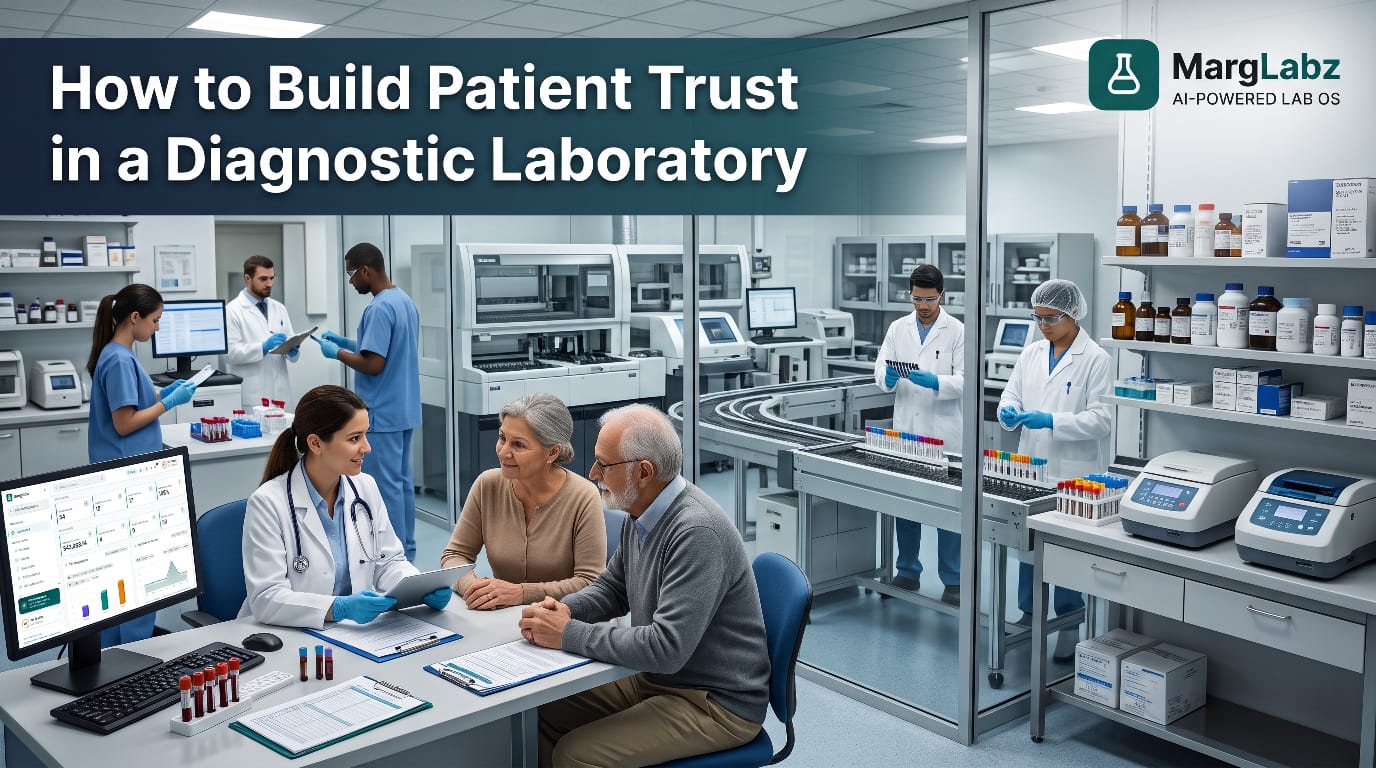
A patient comes into your lab feeling a little anxious about what to expect. He/she does not know what the outcome will be for the test he/she is getting done. He/she has no way of evaluating your equipment, your reagents, or your quality control program. At this point, the patient is handing over a part of himself/herself (a blood sample) as well as personal data, and in many ways, some of his/her peace of mind.
They are able to evaluate everything about the testing process: how they were greeted, if anyone explained to them what would occur after the initial evaluation; how the sample was handled during the time it was collected and transported; whether the results were received in a timely fashion as requested; and whether the data obtained through the test seemed logical. A patient's confidence in diagnostic services does not result from advertising slogans, but from the numerous unique interactions that comprise the totality of a single patient's experience with the service.
This guide has been created to assist Laboratory Owners, Laboratory Managers, and Operational Leaders at Single Site and/or Multi Branch Laboratories in establishing the basis of Patient Trust and providing strategies to enhance Patient Trust at every stage of a patient's interaction with the laboratory, beginning when the patient enters the facility, until the patient receives their results.
Why Trust Matters So Much in Diagnostics
Many businesses give customers the opportunity to check out goods before deciding whether or not to purchase. Laboratories do not. There isn't any way for patients to verify if a hemoglobin reading is accurate. They rely on your judgment and the judgment of your doctor in you.
This makes trust the real product. It affects:
- Will a patient choose you based on a recommendation from their doctor or family member?
- Whether they return, for follow-up tests and annual checkups
- Whether doctors refer to you, because your reports influence their decisions
- How they react to a delay or a mistake, with patience or with anger
- The reputation you have created through the word-of-mouth that spreads faster than any other type of marketing.
Building trust with others takes time. It does not happen overnight. However, it can be destroyed instantly. Just one negative reporting error could wipe out all of the trust you have built with others over several years.
The Pillars of Patient Trust
Most of what patients feel as “trust” rests on six foundations:
- Accuracy and quality: Are results reliable?
- Safety and care: Is the process gentle, hygienic, and careful?
- Transparency: Are prices, timings, and processes honest and clear?
- Do patients understand the significance of the event and what the consequences will be?
- Privacy: Is personal health information protected?
- Accountability: When something goes wrong, does the lab own it and fix it?
The sections below take each pillar in turn.
Pillar 1: Accuracy and Quality
Patients do not directly see your quality control program, but they will experience the benefits of having a successful quality control program. Trust starts when you can show that you have made an effort to give accurate results and demonstrate that you intend to.
- Perform an internal quality control check each day and correct any problems identified before you release patient test results.
- Participate in external quality assessment (EQAS) and review the results
- Maintain calibrated, serviced equipment with proper records
- Use qualified, authorised staff for testing and validation
- Follow documented procedures at every step
- Consider using accreditation, such as NABL, as an objective measure of quality if it relates to your lab.
How to use laboratory software to comply with the requirements of NABL Quality Management (QM) will illustrate how to create a written record that can support your efforts.
Pillar 2: Safety and Care at the Point of Collection
Many times, the collection room is where you do your lab work. This is where patients begin to form an opinion about the hospital.
- Verify identity carefully with at least two identifiers, and do it politely
- I am about to describe the process that will occur next, and then I will relate that back to the treatment of anxiety-ridden patients, children, and geriatric patients.
- Use clean, single-use equipment and visible hygiene practices
- Train phlebotomists in gentle technique and calm communication
- Respect comfort and dignity, including privacy during collection
- Label each of the samples in front of the patient to ensure they know you're handling their samples appropriately.
A patient will have more trust in the result of your work when he/she sees that you are verifying his/her name, properly labeling his/her tube and treating him/her kindly. This part of the process is discussed more thoroughly in your phlebotomy workflow management guide for diagnostic centers.
Pillar 3: Transparency
Transparency creates credibility. Credibility can be destroyed quickly when you have undisclosed costs, confusing timetables, or unclear directions.
- Show prices clearly, including what each package contains
- Give honest report timings and update patients if there is a delay
- Before seeing a doctor, make sure you know what is expected of you, including such things as not having anything to eat prior to your appointment.
- Provide clear receipts with itemised tests
- When you use an outside laboratory to perform a test on a client's sample, let them know. Also let them know when they send the sample out, and approximately how long the process takes.
When you say that a report will be available by 6:00 pm, this is much more important than making big promises. In our Guide to Reducing Report Turnaround Time in Diagnostic Laboratories we give you ideas on how to set reasonable expectations for these types of promises.
Pillar 4: Communication and Understandable Reports
The reader will be left feeling suspicious if the report has too many statistics and acronyms. On the other hand, the reader's concerns can be lessened by using clear language in your reports.
- A uniform and organized format for reporting results, including units of measurement, reference intervals, and clearly identifiable flags.
- I will format my reports so that they are easier to read on a mobile device, as many of our patients use either WhatsApp or email to view their report.
- Add trend views for repeat tests, so patients and doctors see progress over time
- Consider writing simple explanations for what each test is intended to find, and then submit those explanations to your pathologist for review and approval.
- Always suggest that your patient discuss the results they receive from you with their doctor and never use the reports/messages you send them to give medical advice (i.e., provide medical diagnoses/treatment suggestions).
- The customer should find asking questions easy, there needs to be a clear phone number or WhatsApp contact, and the staff should be polite and knowledgeable.
We are going to be exploring how smart AI reports can help patients understand the results of their tests in our next article.
Pillar 5: Privacy and Data Protection
How well a lab handles personal information collected on individuals can make or break the amount of faith people place in that organization. If a lab mishandles that information, it may lose its credibility with people right away.
- The report will only be provided to the patient, or those authorized by the patient to receive it, once they are correctly identified.
- Avoid sending reports to open or shared WhatsApp groups
- Use role-based access so staff see only what they need
- To protect all of your software, hardware and back-up data, create a strong password that is updated frequently.
- Do not use patient names, photos, or results in marketing without clear consent
- Dispose of paper records and printouts securely
- Employees should be trained in the appropriate use of personal data, as well as being aware of any applicable data protection and confidentiality legislation.
The right to privacy is mandated by law. In addition, each day that goes by is a constant reminder of how much you appreciate that person for allowing you to collect their sample.
Pillar 6: Accountability When Things Go Wrong
All labs will eventually make an error. Customers understand that. However, they will never allow a lab to deny making an error (honesty), wait too long for results (delay), or blame them for something that wasn't their fault.
Process for handling reports with corrections; record why the report is being corrected and indicate clearly that this is the updated report.
- In the event of an error that has had an impact on the results of a procedure that both the patient and the physician have been informed about, make contact with both parties as quickly as possible.
- Apologise sincerely and explain what you are doing to prevent a repeat
- I am willing to assist you in remembering easily at no charge to you if I make any mistakes.
- Record complaints and non-conformities, investigate causes, and close the loop
- When you report critical values quickly using a predetermined method, you will want to document who received the critical value notification and when they were notified.
If you handle an error properly, it can increase the amount of confidence a patient has in you. It demonstrates to the patient that you take accountability for your own behavior.
Ethical Marketing and Honest Claims
Marketing is another place where trust is won or lost.
- Make no exaggerated promises such as “100% accurate” or “detects everything”
- Describe packages honestly, including what they do and do not cover
- Avoid pressuring patients into unnecessary tests
- Keep offers simple and genuine, with clear conditions
- Follow applicable advertising rules for healthcare services
We have developed a comprehensive guide for diagnostic labs to improve patient acquisition and retention through ethically based, actionable growth strategies.
Consistency Across Branches
When you provide laboratory services or draw blood from patients in several locations, it is the consistency of your services that will help establish a relationship of trust with each patient. A patient who experienced great service at one location, and then received bad service at another location, will remember the bad experience.
- Use the same SOPs, report format, and pricing rules across all locations
- Train franchise and collection centre staff to the same standard
- Monitor quality, TAT, and complaints by branch
- Apply the same privacy and complaint handling process everywhere
- Share good practices between branches
The Human Side: Staff Behaviour
Technology and processes matter, but patients remember people.
- Greet patients warmly and use their names
- Show patience with elderly patients and anxious families
- Stay calm and polite during rush hours and complaints
- Dress neatly and maintain a clean, orderly workspace
- Train front desk staff to explain, not just process
- Recognise and reward staff who earn patient appreciation
A lab with excellent equipment and rude staff will still lose patients.
How Lab Software Supports Patient Trust
Without properly functioning systems in place, it is difficult to maintain positive intentions. When LIS are correctly configured, they can provide the laboratory professional with confidence by providing defaults that help ensure that the laboratory professional performs accurately, rapidly, and confidentially:
- Barcode-based sample tracking reduces mislabelling and mix-ups
- Analyzer integration and validation workflows reduce transcription errors
- QC records and flags catch problems before reports are released
- Audit trails show who changed or released each result
- Role-based access protects patient data
- Consistent report templates give every patient a clear, professional report
- Reports are sent electronically using either email or WhatsApp and will therefore be available to the patient as soon as possible, in a safe and secure way.
- Dashboards show TAT, rejections, and corrections so management can act early
- Billing controls keep prices and discounts consistent
Modern pathology laboratory software (LMS), laboratory information management software (LIMS), and other laboratory software systems bring together all aspects of the laboratory process. Therefore, if the front desk makes a commitment to a patient, the laboratory will be able to fulfill that commitment. Also, when using networks, diagnostic center management software and a centralized laboratory management system ensure that every branch of the organization is held to the same standards. No matter what the name is, a successful laboratory management system will enable your employees to do tasks correctly every time they complete them with little added effort needed.
Where MargLabz Fits
MargLabz is an internet-based Artificial Intelligence (AI) platform. MargLabz is primarily intended for use by Diagnostic Laboratories, Pathology Laboratories, Collection Centers and emerging networks. MargLabz consists of a number of different applications that provide organizations with the ability to perform registration, billing, accessioning, work list management, quality control, NABL documentation, inventory management, reporting etc., within a single interface. MargLabz also provides a dashboard that displays order information, TAT information, and revenue information. MargLabz offers a variety of pricing models beginning at ₹999/per month + GST. Prior to selecting a partner organization to work with, it is recommended that you request a product demonstration and evaluate how the security measures, user access control capabilities and reporting capabilities provided by each vendor align with your organization’s requirements.
A Simple Trust Audit You Can Do This Week
Walk through your lab as a patient would, and answer honestly:
| Question | Yes / No |
|---|---|
| Was I greeted politely and given clear instructions? | |
| Was my identity checked and my sample labelled in front of me? | |
| Did I know the price and report time before paying? | |
| Did the report arrive when promised? | |
| Was the report easy to read on my phone? | |
| Did I know whom to contact with questions? | |
| Would I feel safe about the privacy of my data? | |
| If there were a mistake, would the lab handle it well? |
Every “No” is a trust gap worth fixing first.
Common Mistakes to Avoid
- Treating trust as a marketing message instead of a daily practice
- Making promises about timing or accuracy that the lab cannot keep
- Hiding or downplaying errors
- Sending reports through insecure or shared channels
- Using fear or exaggeration to sell packages
- Ignoring complaints and negative reviews
- Different standards at different branches
- Neglecting staff training in communication
- Publishing health content without pathologist review
A Simple 30-Day Plan
Week 1: Do the trust audit and list your top five gaps.
Week 2: Simple Fixes - Clearly showing prices; guaranteeing TAT accurately; accurately identifying patients and labeling them correctly.
Week 3:Review your method for using your organization's privacy policies and reporting practices, along with the system you created for correcting reports and filing complaints.
Week 4: teach your team members how to communicate, create a system for receiving customer feedback, and begin to track turn-around time (TAT), rejections, corrections and customer complaints.
Then review monthly. Trust grows with consistent, visible effort.
Final Thoughts
Patients go to a laboratory to find out about themselves. When you interact with every single patient, from greeting the person to protecting their privacy, you will create a sense of security and trust or destroy the patient's faith in you.
The foundation of your practice should be established on; accuracy, completeness, truthfulness, effective communication, protecting patient privacy, and being accountable for your actions. Once you have created this foundation, establish procedures to automate "best practices." By doing this consistently, your patients will come back. Many of those who return will also bring in their family members.
If you wish to maintain patient trust with consistent quality records, daily work flow, and reporting from each of your lab branches, MargLabz has developed lab management software for use in diagnostic and pathology laboratories, collection centers, and multi-branch networks. Plans start at ₹999 per month plus GST.